
Black History Month: James Baldwin
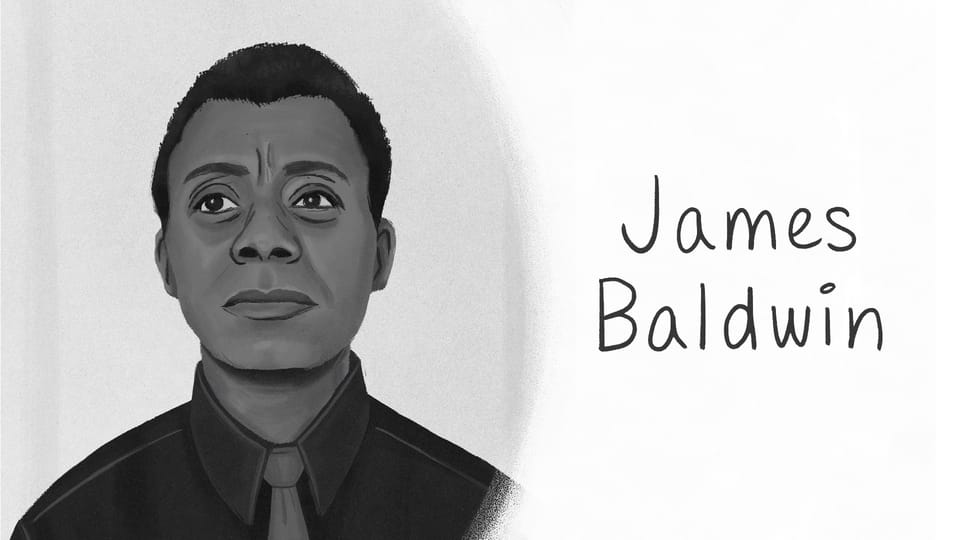
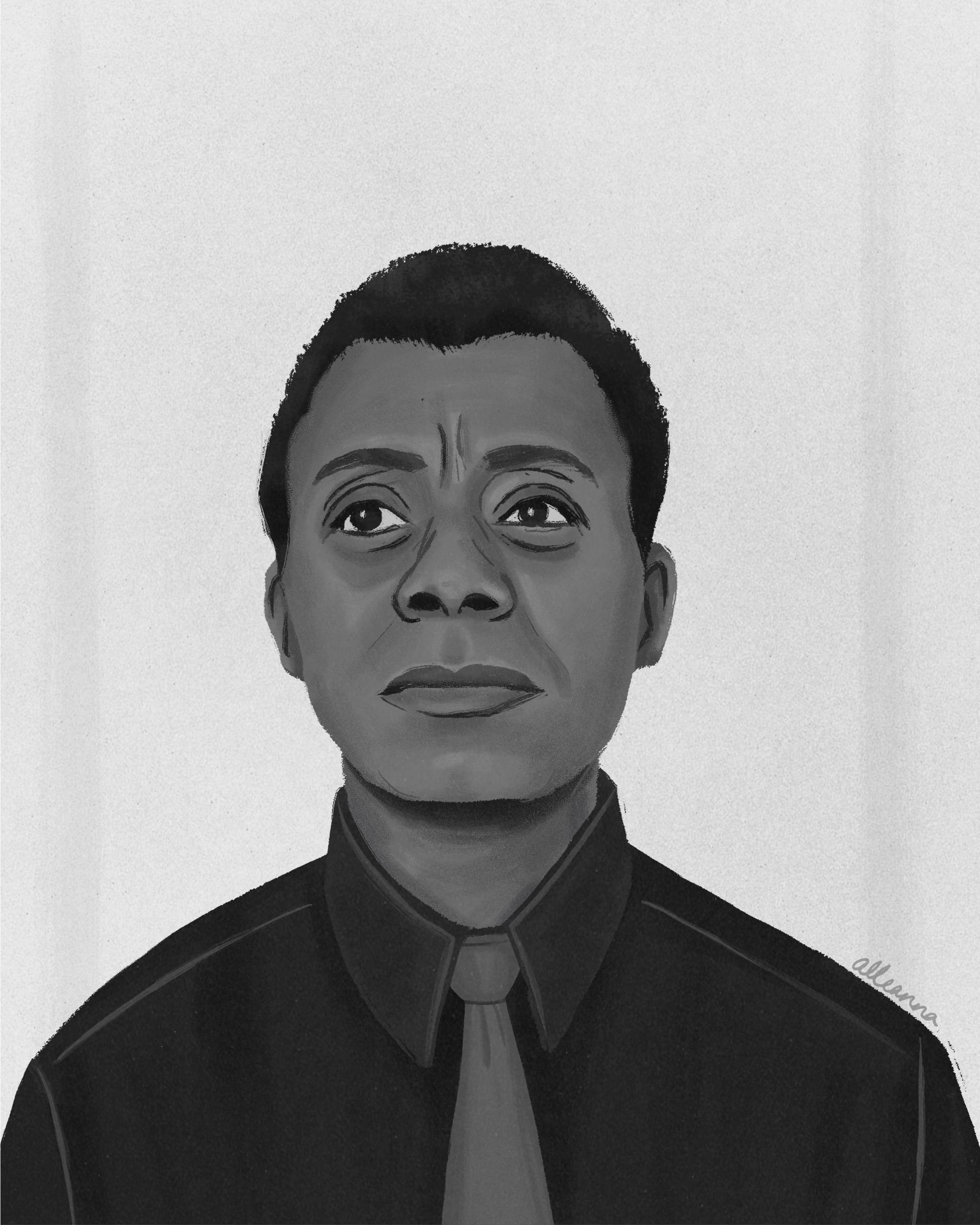
Today's Black History Month illustration is of James Baldwin, one of the 20th century’s greatest writers. Baldwin broke new literary ground by exploring racial, social, sexual, and class distinctions in his works, and he was known for his essays on the Black experience in America.
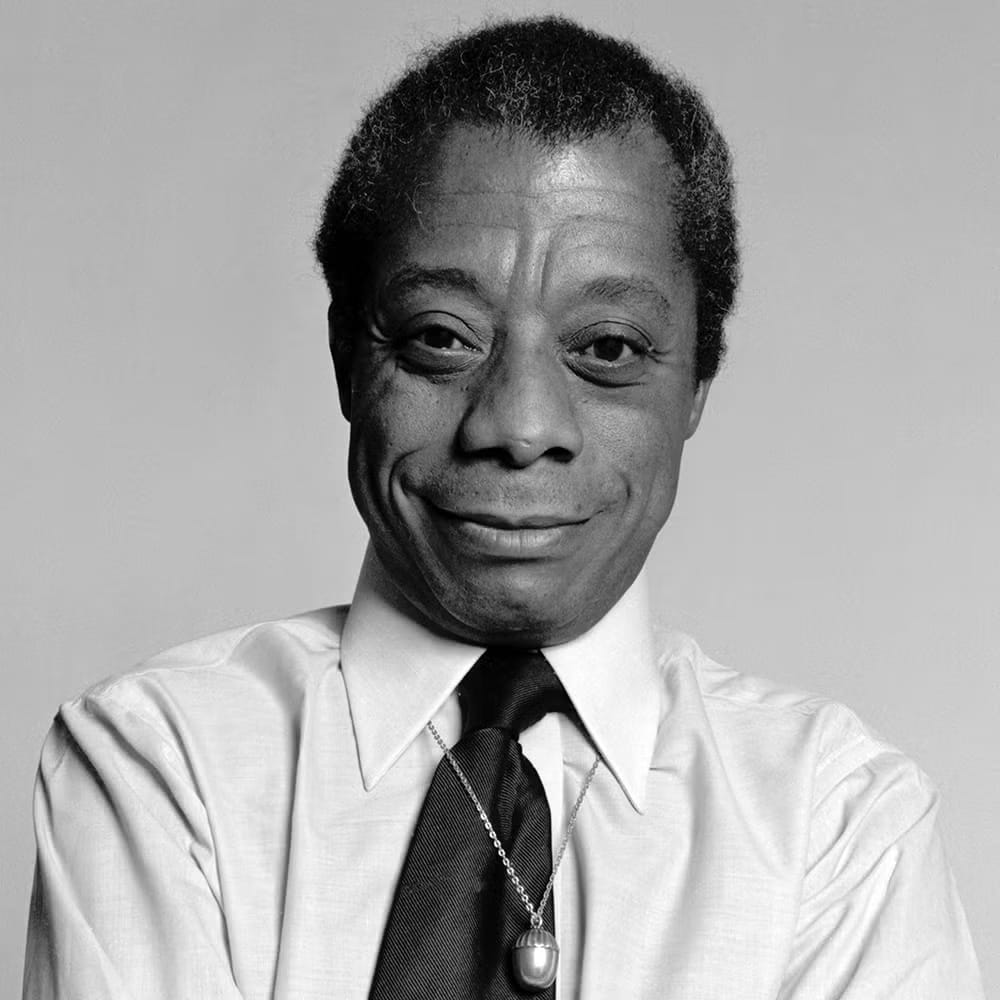
James Baldwin was born in Harlem in 1924. He was the oldest of nine children. His mother, Emma Jones, married a Baptist minister, David Baldwin, when he was three years old.
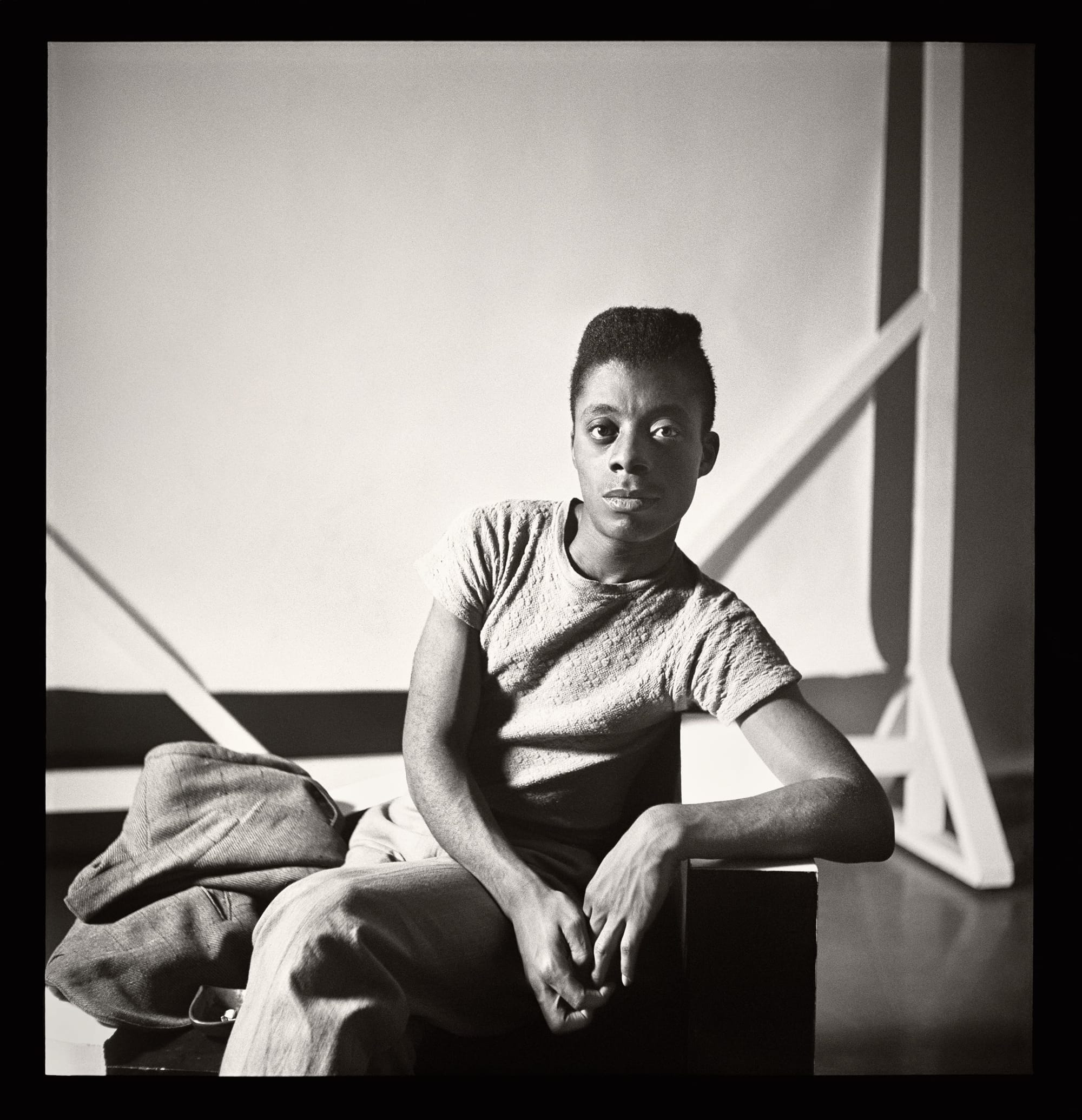
Despite their strained relationship, Baldwin followed in his stepfather’s footsteps and became a youth minister in a small Harlem Pentecostal church from ages 14-16. Also during his early teens, Baldwin was spending a lot of his time in libraries and found a passion for writing.
At 18, he worked with the NJ railroad, and then moved to Greenwich Village where he worked for a few years as a freelance writer writing mostly book reviews. Baldwin caught the attention of the well-known writer Richard Wright who helped him secure a grant so he could support himself as a writer.
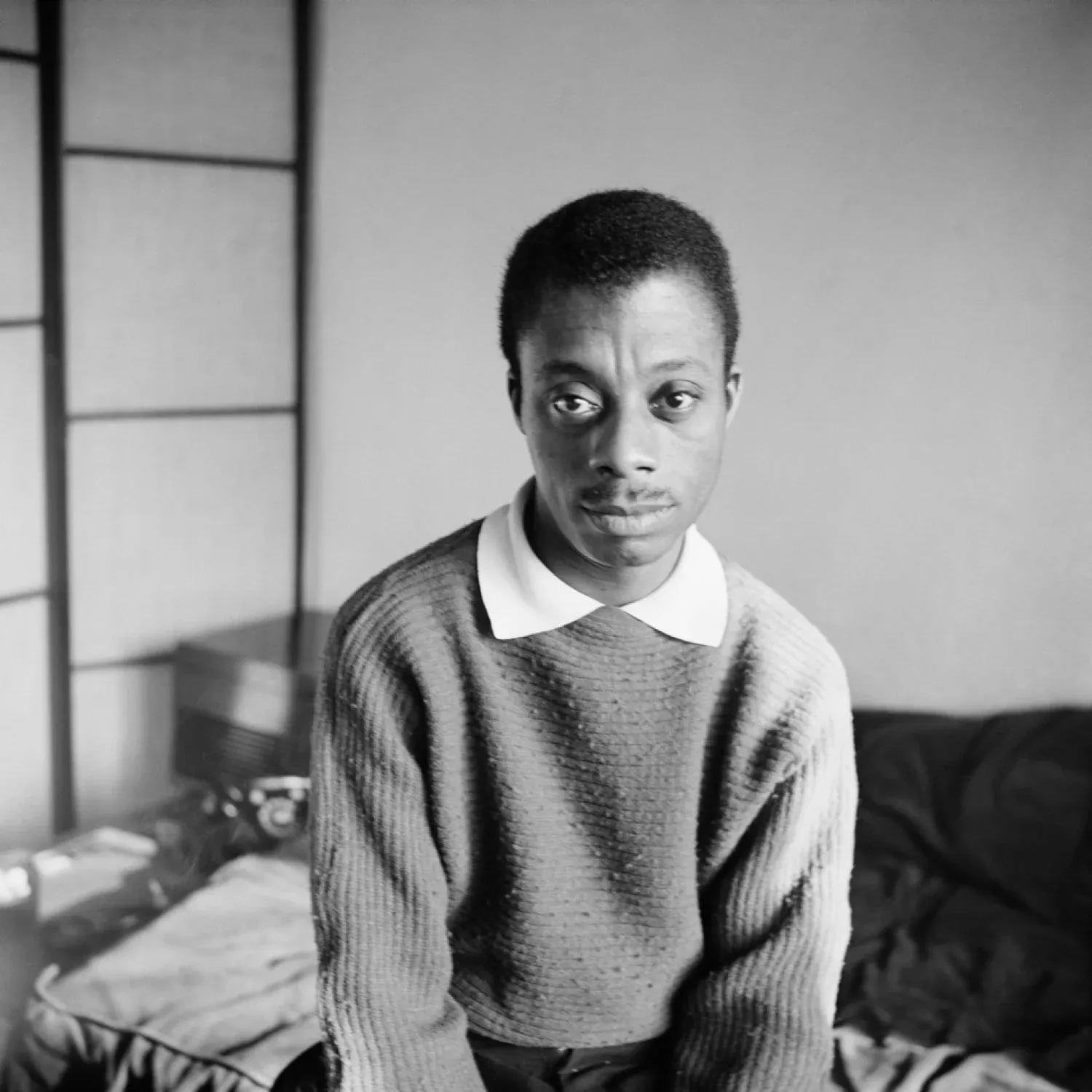
In 1948, at the age of 24, Baldwin left the US to live in Paris because he couldn’t tolerate the discrimination he experienced. He often was a target of beatings by local youth and the police due to homophobia and racism. Baldwin hoped to find enough distance from the society he grew up in to write about it.
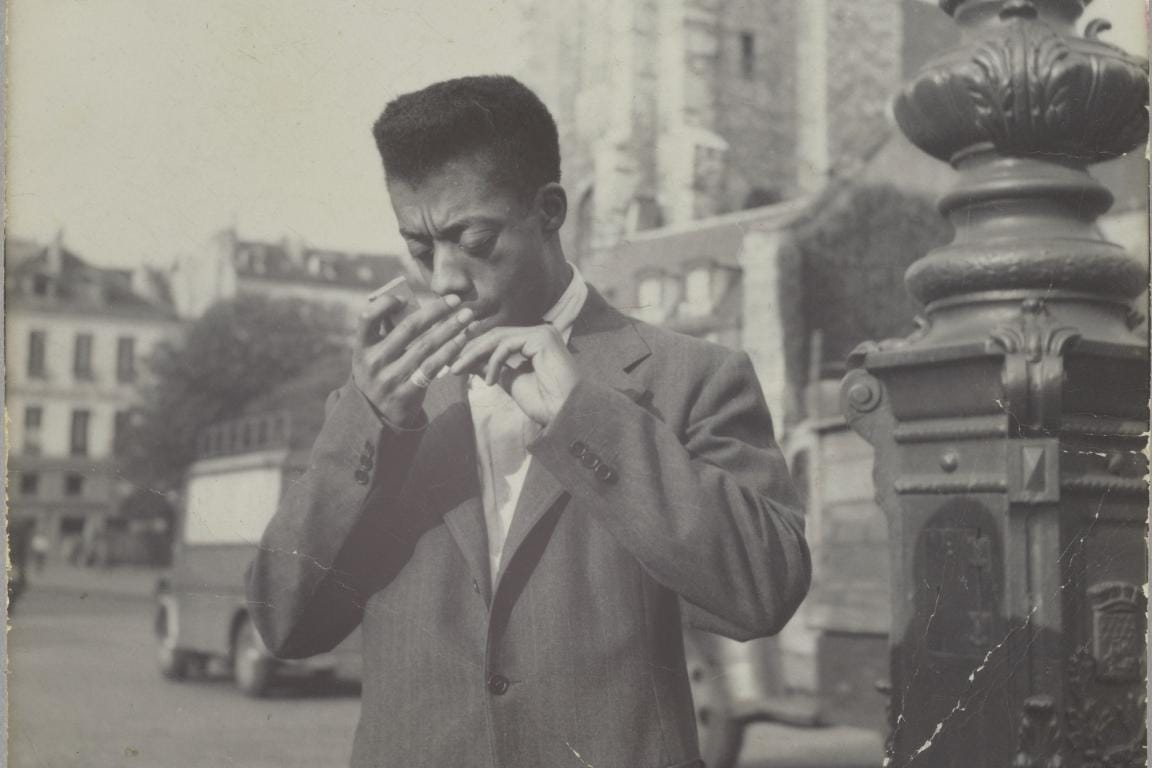
In 1953, Baldwin wrote his first novel “Go Tell It on the Mountain,” an autobiographical work about growing up in Harlem. This is often seen as his finest work because of the way he described the struggles of Black Americans.
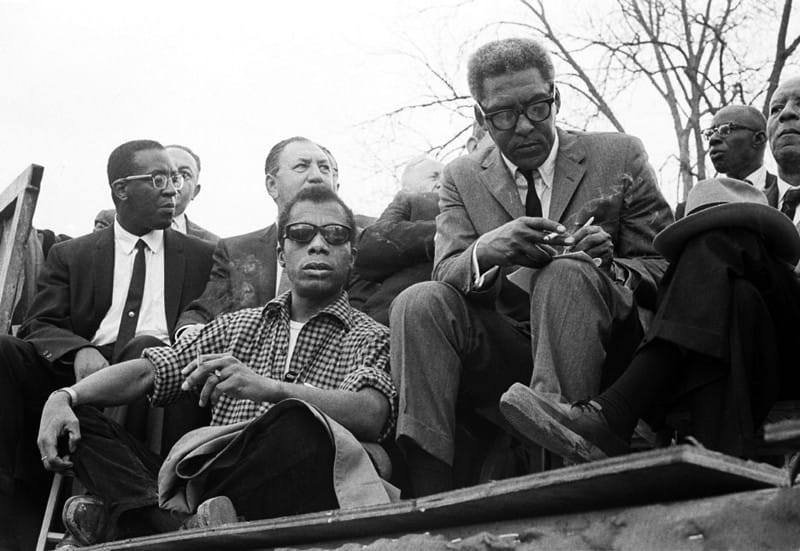
Over the next ten years, Baldwin moved between Paris, New York and Istanbul. He wrote two books of essays, Notes of a Native Son and Nobody Knows My Name, and two novels Giovanni’s Room and Another Country. The essays explored racial tension and the novels dealt with then taboo themes (homosexuality and interracial relationships). Nobody Knows My Name and Another Country were immediately bestsellers.
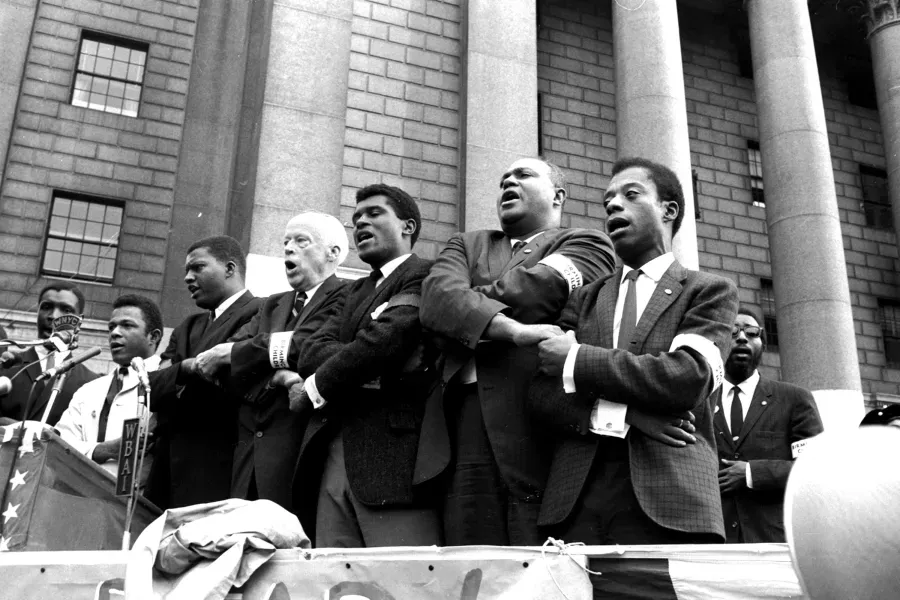
Baldwin’s travels also brought him closer to social concerns of his home, US. In the early 60s, he returned to the US to participate in the Civil Rights Movement. He attended the March on Washington in 1963 and the Selma to Montgomery March in 1965. His essays Notes of a Native Son, Nobody Knows My Name and The Fire Next Time became essential works during this time because of their call for human equality.
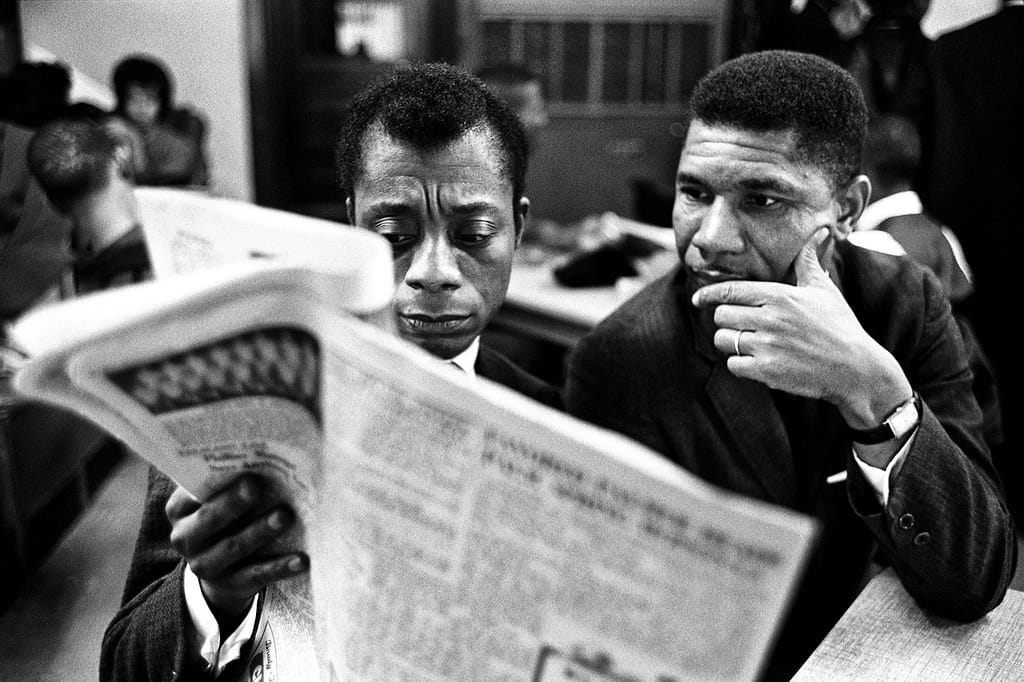
After the assassination of his three friends: Medgar Evers (1963), Malcolm X (1965), and MLK (1968), he returned to France and worked on a book about the disillusionment of the times, If Beale Street Could Talk (1974).
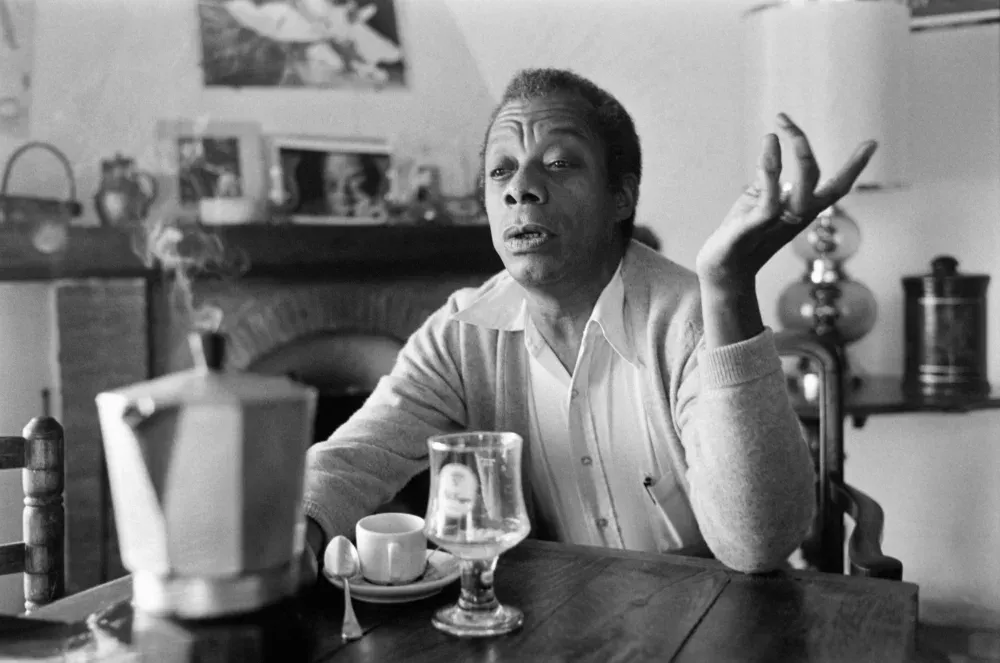
During the last few years of his life, he continued to produce important works of fiction, non-fiction, and poetry. He also started teaching. Baldwin passed away in 1987 after a short battle with stomach cancer.
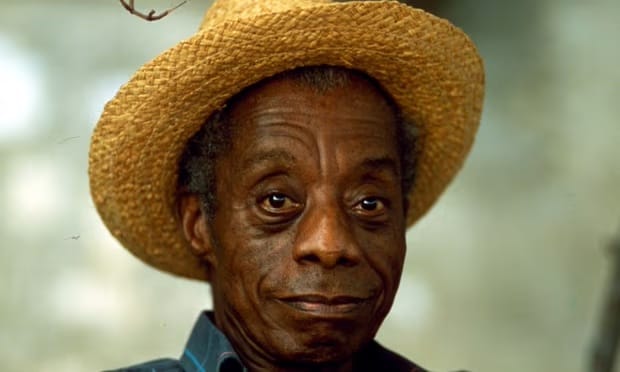
My illustration of James Baldwin is available as a print here.
This is my last Black History Month illustration for this series, but I’ll be back tomorrow with a wrap up!
-Alleanna
Thank you for reading! My blog and newsletter are reader-supported, so to help me keep it going, you can share this post with someone who would like it, read my books, or buy a Black history art print!
If you’re seeing this blog for the first time, you can read previous posts here and subscribe below.
Further reading and watching:
Picture Book: Jimmy's Rhythm & Blues: The Extraordinary Life of James Baldwin, written by Michelle Meadows and illustrated by Jamiel Law
Picture Book: Go Tell It: How James Baldwin Became a Writer, written by Quartez Harris and illustrated by Gordon C. James
Interview: Conversation with a Native Son: Maya Angelou and James Baldwin (26 mins)
Interview: James Baldwin and Paul Weiss's Debate on Discrimination in America - The Dick Cavett Show (1969) (13 mins)
Interview: A Conversation with James Baldwin and Nikki Giovanni - SOUL! (1971) (1 hr 56 mins)
Documentary: I Am Not Your Negro (2016)
Movie: If Beale Street Could Talk (2018)
Sources:

 René Ostberg René Ostberg is an associate editor at Encyclopaedia Britannica.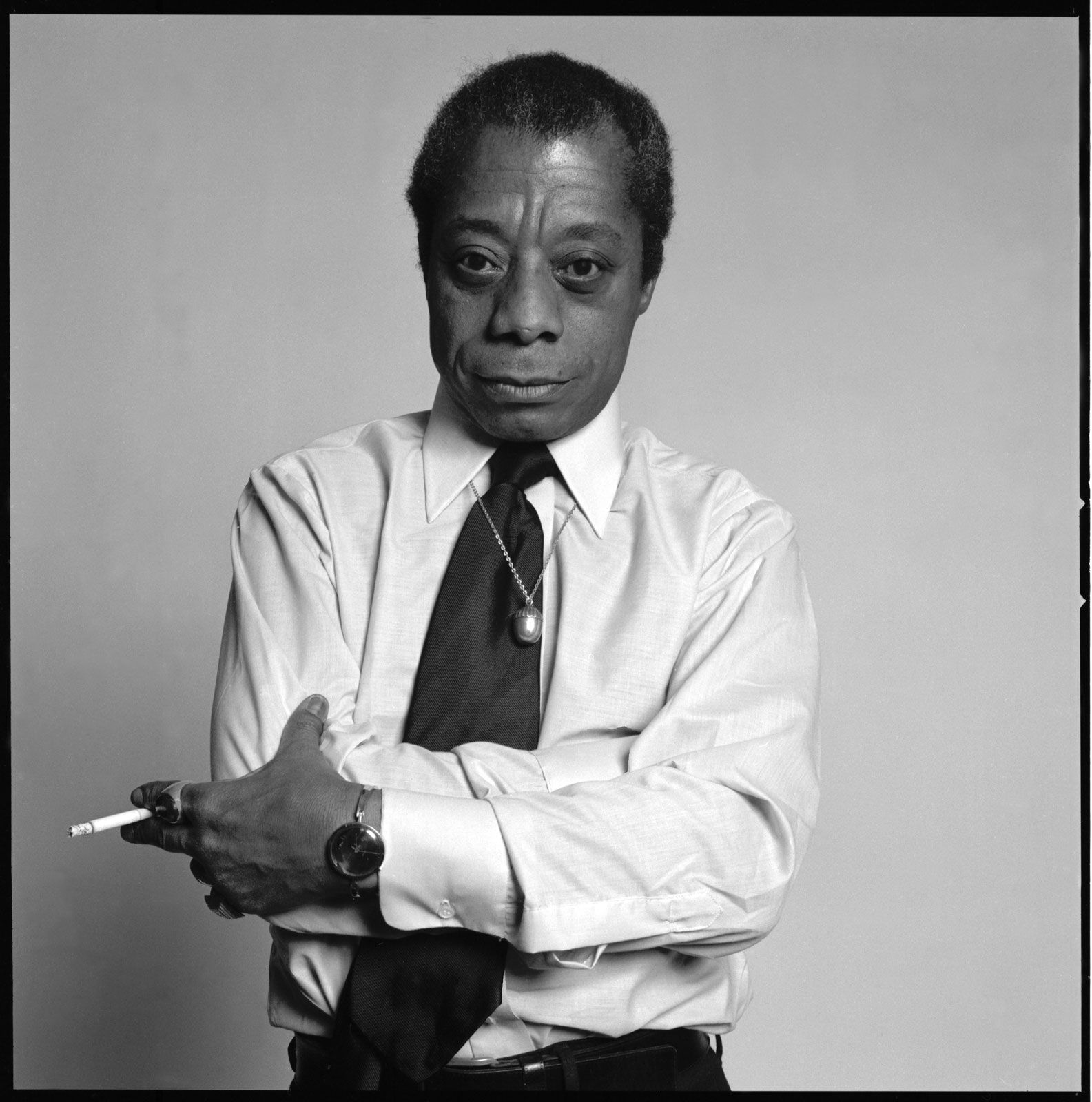





Member discussion